_
Lets work together
arCONTROL
Client
arCONTROL
Industry
Manufactoring
Expertise
Digtial Exploration & Digital Twins
About
arCONTROL uses Augmented Reality to bring structural diagnostic data directly onto the real structure. Engineers can view hidden conditions, inspection results, and material analyses in their actual spatial context — hands-free and on site.
Overview
Challenge
Solution
Functionality
In Practice
Approach
_
Making Hidden Conditions Visible
Maintaining aging infrastructure requires reliable information about a structure’s real condition. Many critical issues are not visible on the surface and can only be identified through methods such as ultrasound testing, compressive strength testing, or core drilling.
In practice, however, these results are often spread across different reports, systems, and project partners. That makes them difficult to access and use during inspections.
_
Bringing Data Back to the Structure
arCONTROL brings this information back to where it is needed most: the structure itself.
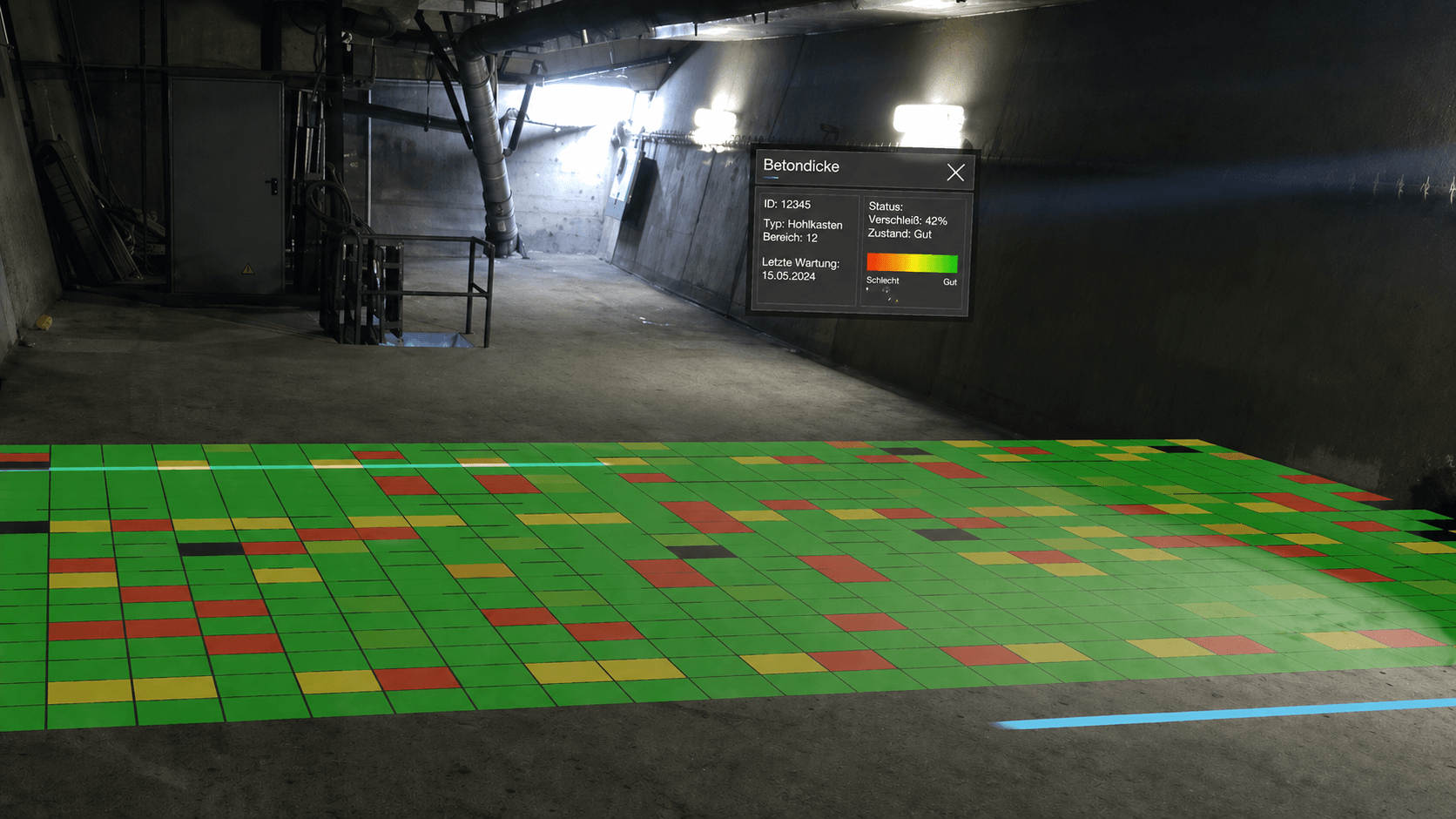
Using Augmented Reality, diagnostic data is spatially linked to the asset and displayed directly on site. This allows engineers and inspectors to better understand hidden conditions, interpret findings more quickly, and compare current and historical results in context.

_
How it Works
With devices such as the Microsoft HoloLens 2, users can access inspection results hands-free while working directly at the structure.
This makes it possible to:
display diagnostic data on the structure
visualize hidden conditions in their real location
compare current and previous inspection results
improve orientation and understanding during inspections

_
Use Case
One example is the visualization of material and inspection data inside a bridge structure, such as concrete slab measurements in a box girder.
By placing this information directly in the user’s field of view, arCONTROL creates a clear connection between the physical asset and the underlying data.
_
Built for Practical Use
Augmented Reality in the field requires intuitive interaction and clear information design. Through UX research and validation across multiple projects, the underlying Digital Core Framework has been developed for practical use in real inspection environments.
Contact
Lets Build Something Together

Lets Build Something Together