_
Lets work together
Hellermanntyton - From VR showcase to virtual product universe
CLIENT
HellermannTyton
INDUSTRY
Manufactoring
EXPERTISES
Virtual Showroom & Exhibition
CREDITS
Multiple VR applications, real industrial environments, and one central virtual academy: together with HellermannTyton, an immersive platform for product communication, trade fair presentations, and training was developed over several years.
PROJECT OVERVIEW
Challenge
Automotive
Railway
Fibre-to-home
_
Interactive Exploration of a Wind Turbine
The collaboration with HellermannTyton is a strong example of how a digital project can evolve over several years from a single demonstration application into a comprehensive virtual product ecosystem. The starting point was a clear challenge: many HellermannTyton products fulfill a central technical function, yet they rarely attract much attention. Components for cable management, connection technology, or identification are usually installed out of sight in practice. The goal was therefore to make these solutions tangible in a context that creates attention and communicates their importance clearly – especially at trade fairs and in talent recruitment. Virtual Reality provided the ideal stage for this.
It began with a relatively compact application: a virtual version of the HT Academy, based on HellermannTyton’s real training room in Tornesch. This first VR experience was initially developed for smartphones and simple cardboard headsets. Visitors could move through a virtual room, discover products, and experience initial interactions. The application was intentionally designed as an easy entry point into VR – easy to understand, intuitive to use, and ideal for quickly generating interest at events.
Following the success of this first application, the desire arose not only to present products in isolation, but directly within their real application environments. This led to the development of several standalone VR applications, each designed for specific trade fair appearances and each making different HellermannTyton industry sectors tangible.
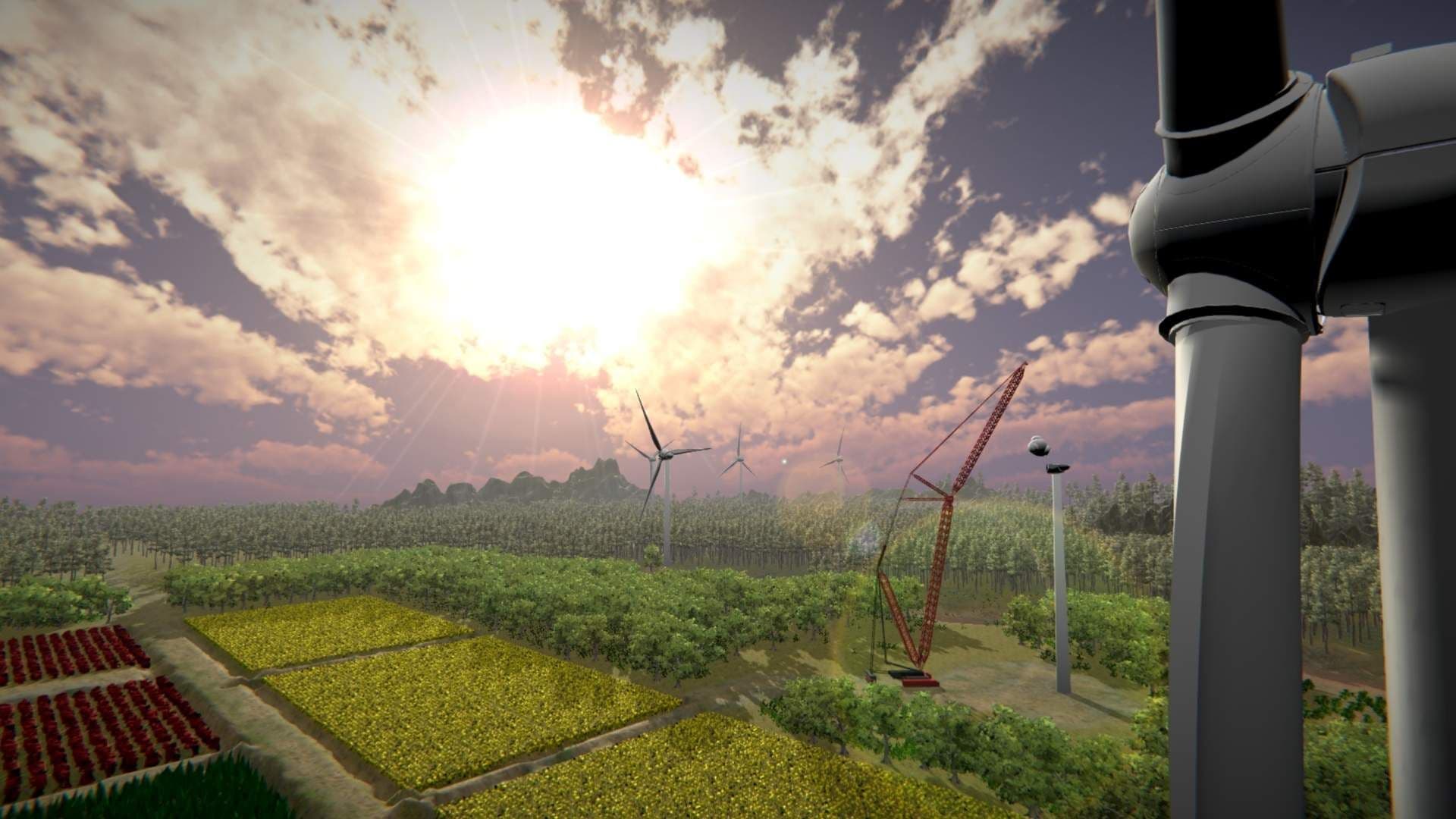
For the wind energy sector, a VR application was created that placed users inside a fully modeled wind turbine. From the base of the tower all the way to the tip of the rotor, visitors could explore the installation and discover where HellermannTyton products are used. The virtual environment not only made technical relationships visible, but also offered an impressive experience – including the view from the top of the turbine across the landscape.

_
Inspection of Small Vehicle Components in VR & 3D
In the automotive sector, a fully modeled vehicle became a virtual experience space. Users could open doors, operate a lifting platform, or use an “X-ray view” to look through body parts and discover hidden components. This made it clear how many areas within a vehicle rely on HellermannTyton products – often in places that are barely visible in the real vehicle.

_
Rail Products in Real-World Context
With Railway VR, the use of products in rail transport came into focus. In an opened train segment, users could view cable routes and fastening solutions directly in context. The application was complemented by animations that clearly demonstrated how individual components are installed or used. This created a particularly strong link between the product and its practical application.

_
From Standalone Demos to a Connected VR Platform
One of the most extensive applications was eventually created for the Connectivity and Fibre-to-the-Home sector. For this purpose, an entire virtual small town was modeled – including residential areas, high-rise buildings, and infrastructure points. Products were placed exactly where they are used in a real fiber network: from central infrastructure all the way to the connection inside a building. An interactive miniature model of the town helped users orient themselves within this large virtual environment and switch quickly between different areas.
Originally, all of these applications were intended as standalone trade fair experiences. Over time, however, a new idea emerged: instead of running several separate VR demos, they could be brought together into one shared environment. The HT Academy therefore evolved into the central virtual lobby of an entire product universe. In this environment, visitors could pick up small models – such as a car, a train, or a wind turbine – and dive directly into the respective application. This created a connected journey through different HellermannTyton industries and fields of application.
Over several years, the project evolved step by step: from a simple demonstration application to a modular VR platform with multiple industry worlds. Each new application introduced larger environments, additional functions, and new interaction concepts – while at the same time the HT Academy grew into a central starting point for immersive product communication.
The result is far more than a single VR demo. It is a digital experience space that makes complex technical solutions understandable, generates attention at trade fairs, and places even inconspicuous products in an impressive context. The journey from the first mobile academy to the connected VR product universe shows how a small idea can grow into a comprehensive platform for immersive industrial communication.


Contact
Lets Build Something Together

Lets Build Something Together